
By Amy Yarger, Butterfly Pavilion Horticulture Director
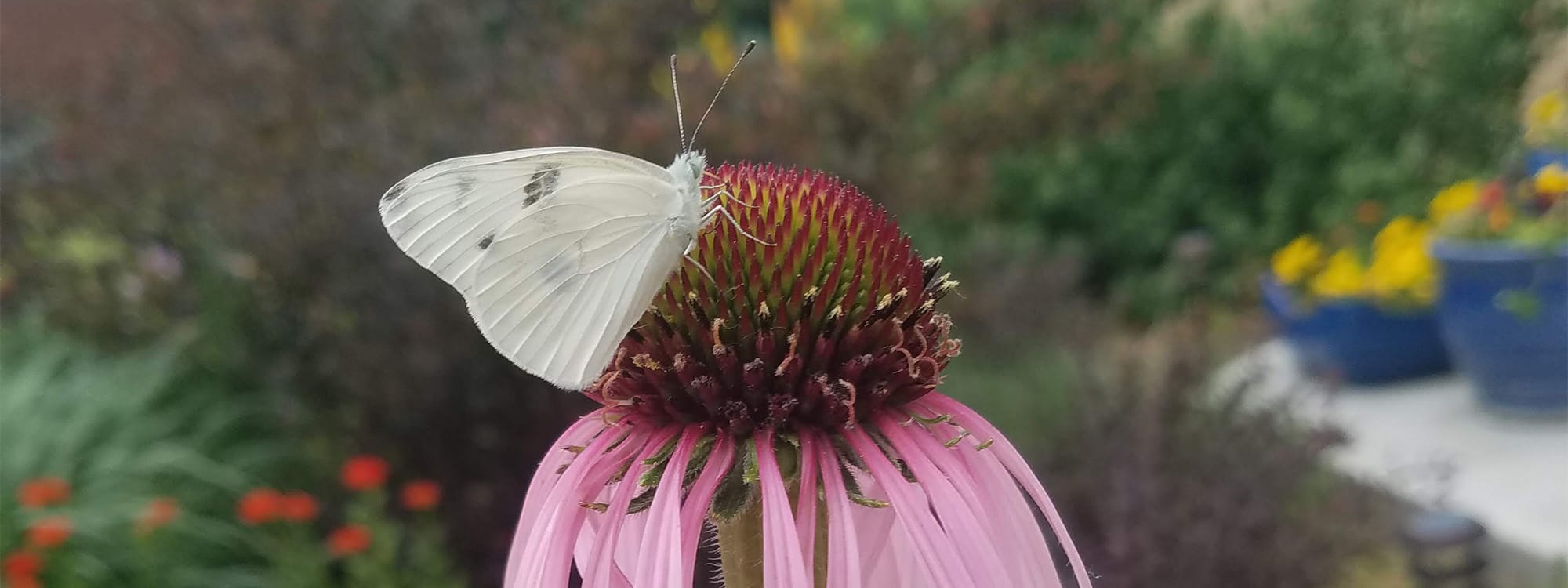
From early spring until frost, little white butterflies are probably the most common ones we see in our gardens and parks. These butterflies, members of the Pieridae or sulfur family, emerge from winter hibernation in their chrysalids to flutter over weedy spaces, vegetable patches, and along drainages and waterways like tiny bits of clouds descended to earth. If you don’t look closely, you might think all the little white butterflies are the same. However, there are nine species in this group of white butterflies in Colorado; one is considered an exotic agricultural pest while the others are native pollinators.
Cabbage white butterflies (Pieris rapae) arrived in North America from Europe in the 19th century, most likely on a shipment of produce. They have, as the name implies, white wings spanning about two inches with darkened tips and distinct black dots in the center of each forewing. Cabbage white butterflies lay their eggs on – surprise!- plants in the cabbage family, and their caterpillars greedily eat the leaves, flowers, and stems, leaving behind kale, cabbage, broccoli, and cauliflower that looks like Swiss cheese. A female cabbage white butterfly can lay over 500 eggs in her lifetime, and since they have multiple generations per year, that means a lot of caterpillars, especially where cabbage relatives are common. One female may be the ancestor of millions of descendants in just a few generations! Many early-season weeds belong to the cabbage family, which means that reproduction isn’t limited to kitchen gardens or farms, either. Because of this adaptability and the global transport of agriculture, these “imported cabbageworms” can now be found on every continent but Antarctica.
However, not all white butterflies pose a threat to your future cole slaw and sauerkraut harvests. Checkered white butterflies (Pontia protodice) are native to North America and prefer to lay their eggs on plants like the Rocky Mountain beeplant (Cleome serrulata), as well as on cabbage relatives. Their life cycle is similar to that of their European cousins, but you can tell them apart by the additional smoky smudges on the edges of their forewings. Males of this species will find areas with suitable host plants and then “patrol” flat, sunny areas for females. These butterflies are good fliers, known to manage over five miles in one day.
And these aren’t all the white butterfly species in Colorado. Depending on where you are in the state, you might find pine whites, western whites, and others. The wing pattern markings of white butterflies can vary depending on location, genetics, and age, making members of this group sometimes hard to tell apart in the field. A particularly smudgy checkered white might look more like a western white, or an old checkered white with many scales knocked off might be confused for a cabbage white. This is part of what makes butterfly identification so fun and challenging, or at least that’s what we bug enthusiasts tell ourselves on our good days.
These butterflies all provide important food for birds and other wildlife, while also serving as pollinators. For the native species, planting a diversity of native wildflowers that bloom from spring to fall, will fuel the flight of adults. Including Rocky Mountain bee plant, an annual wildflower that grows easily from seed and attracts many pollinators, also ensures that the native checkered white butterflies can reproduce. Avoiding using chemical pesticides in your garden also promotes the health of these creatures since they are extremely sensitive to chemical pollution. These landscape practices will help other pollinators, too!
But how to limit the damage from those hungry cabbage whites without endangering the other butterflies? Physical controls like using floating row covers over new crops and handpicking eggs and caterpillars off leaves can be effective for smaller vegetable gardens. Interplanting vegetables with flowering herbs and flowers such as dill, fennel, and calendula will attract the natural predators of insect pests like the cabbage white butterfly. I think you’d have to be pretty hardcore to do what my dad used to make me do as a kid – go out with a net and catch as many adult cabbage white butterflies out of the vegetable garden as possible. There was an inexhaustible supply, and I’m pretty sure I didn’t make a dent in the population, but the activity probably fueled my interest in invertebrates and made me the pollinator-lover I am today.
Want to learn more about pollinators and how to help them? Contact Butterfly Pavilion’s horticulture department at habitat@butterflies.org!