
By Amy Yarger, Butterfly Pavilion Horticulture Director
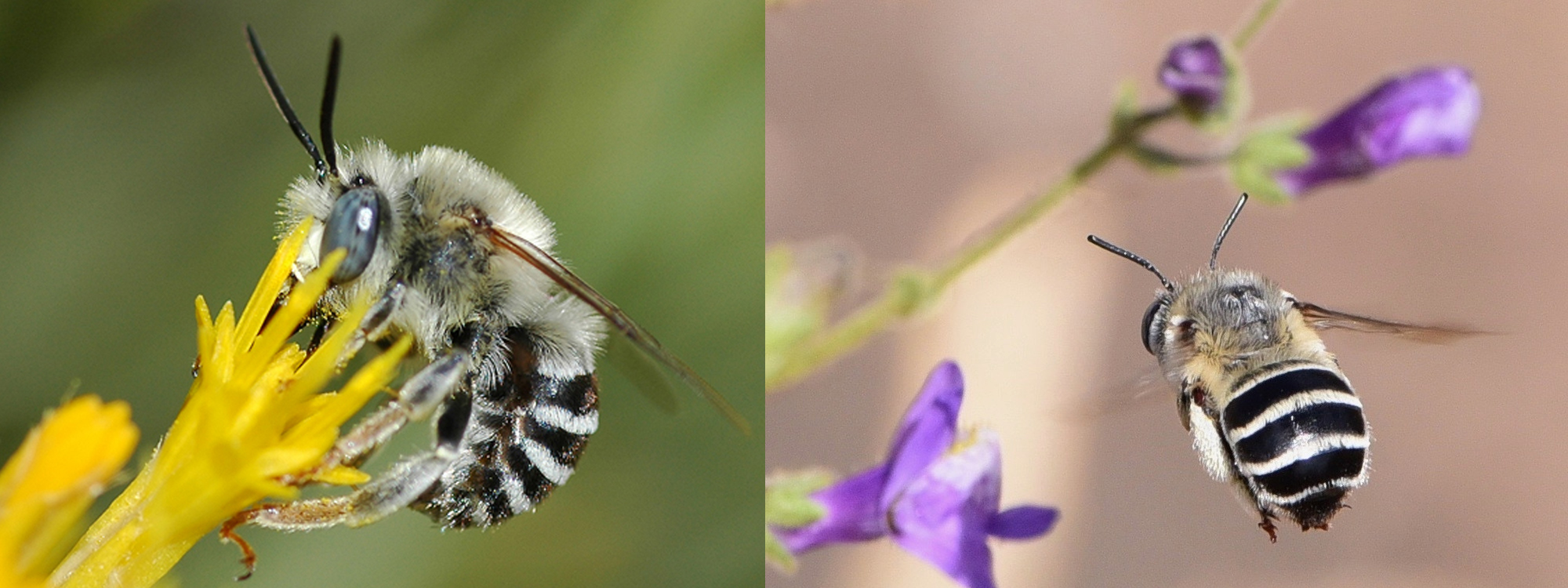
The statuesque body of a bumble bee seems the opposite of what we think of as aerodynamic, and yet they fly up to 5 kilometers (over 3 miles) to find pollen and nectar. Well, you haven’t seen anything yet! I’d like to introduce you to our native digger bees – bees that, like bumble bees, are round, fuzzy and sometimes quite large, but so fast that they barely register as a blur. They are so fast that they are difficult to photograph, so other people might accuse you of making them up like some sort of imaginary pollinator friend. But you can let those naysayers know that digger bees (genus Anthophora) are important native pollinators, with over 400 species around the world and 70 species in the United States.
Like bumble bees, digger bees have stout, hairy bodies adapted to carrying pollen. They have large eyes and great eyesight. Their markings can be very similar to those of bumble bees, consisting of yellow, white, gray, reddish or black bands. Sometimes, they have shiny abdomens instead of furry ones. Even within one species, there may be enough variability that they are difficult to identify. And their speedy, skittish flight certainly doesn’t help with identification.
People who are unfamiliar with these insects might assume that their fast flight and numbers indicate aggressiveness. However, if you don’t disturb their nests, you can peacefully watch them zipping around in unstoppable figure 8 patterns. Digger bees are fast-moving but docile – fuzzy, big-eyed speed demons that nest in bare spots in the ground. About 70% of our native bees are ground nesters, including digger bees. Digger bees are solitary nesters, but they like to build their nests in the company of others. Their colonies are ephemeral, being active for only a couple of weeks each year. Digger bees can live in urban gardens, open grasslands, and sunny slopes.
Adults emerge from their pupa in spring, with the more plentiful males maturing first. Females mate only once, often on flowers, while males will mate with multiple females. Females then look for nest sites, zigzagging over existing cracks and holes to choose a spot to dig with their jaws and legs. Later-emerging bees will choose spots near these pioneers. Female bees line each nest with an oily substance to keep them waterproof and provision brood cells with pollen to feed their young. Male bees don’t hang out in these nests – sometimes you can see them sleeping under leaves or holding on to plant stems early in the morning.
Digger bees also visit a wide range of plants, serving as generalist pollinators. Female bees gather both pollen and nectar to feed larvae; their hairy legs help with transporting pollen back to the nest. I’ve seen our spring diggers visit golden currant (Ribes aureum), chokecherry (Prunus virginiana), Oregon grape (Mahonia spp.), and catmint (Nepeta spp.) but later in the season, they may prefer sunflowers and flowers with long, tubular corollas, such as beardtongue (Penstemon spp.) and bee balm (Monarda spp.).
There are many ways to help digger bees and our other early season pollinators. Making sure there are enough blooms early in the season when food is limited can help those spring emergers. Many of our native shrubs bloom heavily in April and May when we see our first digger bees. We can also make more habitat for digger bees and other ground-nesting bees by keeping some bare patches of ground without landscape fabric or weed barrier. And finally, the easiest way we can help them is by telling others about them and raising awareness. These speedy bees help our ecosystems, pose little threat to us, and are adorable if you see one up close. Spotting them is a great way to welcome the spring season!
Learn more
Want to learn more about pollinators and how to help them? Contact Butterfly Pavilion’s horticulture department at ayarger@butterflies.org!
If you see this pollinator or others around Baseline, take a picture and upload it to Baseline’s iNaturalist page. By doing so, you can be a citizen scientist and help track the diversity and volume of pollinators at Baseline.