
By Amy Yarger, Butterfly Pavilion Horticulture Director
Wasps get a bad rap, especially the big ones, like the spider wasps. When “Alien” screenwriter Dan O’Bannon was looking for the ultimate monster, he went straight to spider wasps for inspiration. And why not? Spider wasps are fast, sleek-bodied fliers, often associated with painful stings. They are not fuzzy like bees or harmless like butterflies. They look intimidating, like the “Alien” queen herself. Lucky for us, the inspiration for the sci-fi classic is a lot easier to get along with in real life. Spider wasps, despite their scary appearance, are among the more peaceful wasps…unless you are a spider.
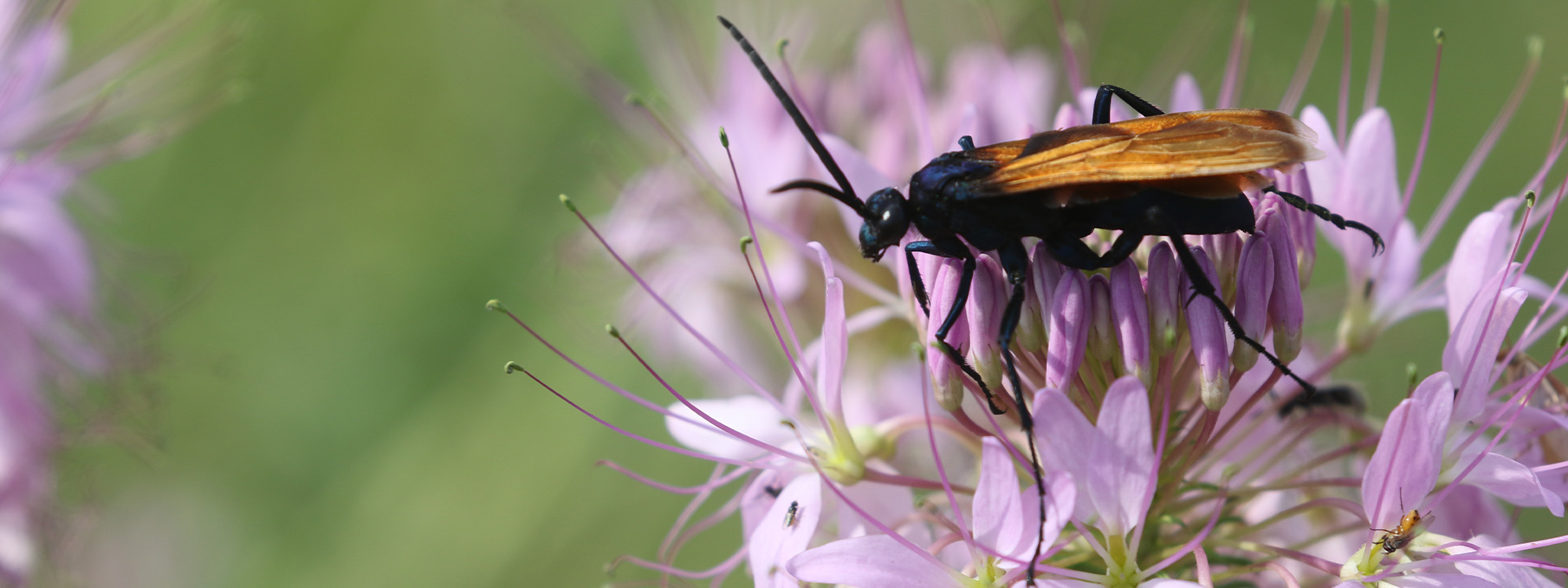
Spider wasps range in size from about half an inch to almost 2 and a half inches long. These solitary wasps have shiny dark bodies, sometimes marked with bright warning colors to remind potential predators of their sting. They have long, spiny legs and often smoky or amber-colored wings. Females are usually larger than males. They are strong fliers, but you might see them move along the ground in a way that looks nervous, with a lot of wing-flicking and twitching. But they aren’t nervous, they are on the hunt for spiders. Depending on the type of spider wasp, they may parasitize different groups of spiders – wolf spiders, jumping spiders, or tarantulas, just to name a few.
These spiders, once paralyzed and brought to a specially constructed nest, will provide fresh food for the wasp’s larvae as they grow. Sometimes you can see wasps dragging spiders along the ground. Female wasps may use the spider’s own home or dig a burrow, usually close to where they attacked, to put their prey and lay a single egg on its abdomen. The female wasp may then close the burrow or disturb the soil so that the nest site is better hidden to protect her young. Once hatched, the grublike larvae subsists on the living spider buffet, saving the vital organs for last. And then it makes its way out of the spider to overwinter as a pupa – analogous to the infamous “chest-burster” scene that has given so many of us nightmares. Science journalist Carl Zimmer summed it up best: “when an alien bursts out of a movie actor’s chest … it is nature itself that is bursting through, and it terrifies us.”
But never fear, the native spider wasps we see at Baseline are denizens of sunny grasslands and gardens, drinkers of nectar and honeydew. Spider wasps as a group are cosmopolitan, with 4000 species found across every continent except Europe and Antarctica. They are important for the ecosystem because they keep spider populations in balance, provide food for birds and other wildlife, and pollinate native plants. Some of the plants they especially like have large clusters of small, shallow flowers – yarrow, dill, sunflowers, but especially swamp milkweed (Asclepias incarnata). At Baseline, we saw them visiting Sedum “Autumn Joy”, which has large tight clusters of small, long-lasting flowers.
When bug nerds talk about this misunderstood insect, we like to wax poetic about the powerful sting. (Dr. Justin Schmidt, the creator of the “Schmidt Sting Pain Index” described it as ““Blinding, fierce, shockingly electric. A running hair dryer has been dropped into your bubble bath.”) We like to describe the gnarly details of the larva gnawing on the paralyzed spider from the inside out. But we also remember that these aerodynamic and graceful insects are shy around humans and interactions with us are rare. We understand that these animals are on a mission, taking care of themselves and their families, and not out to terrify us. Spider wasps are an excellent reminder that nature isn’t always sweet and cuddly, but it is always fascinating and worth conserving.
Want to learn more about pollinators and how to help them? Contact Butterfly Pavilion’s horticulture department at ayarger@butterflies.org.
If you see this pollinator or others around Baseline, take a picture and upload it to Baseline’s iNaturalist page. By doing so, you can be a community scientist and help track the diversity and volume of pollinators at Baseline.