
By Amy Yarger, Butterfly Pavilion Horticulture Director
A decade ago, people would ask me about how to attract butterflies but not bees. And then people would ask me about bees but they meant specifically honey bees. I’ve noticed the pollinator conversation is now at the point where native bees are prized in all their zippy, fuzzy, glittery glory. And even better, we occasionally celebrate the “other pollinators”. The phrase “other pollinators” is music to my ears, and I am here to insert a wee guitar solo amid that chorus. A buzzing, slightly whiny guitar solo that sounds suspiciously like a large, shiny fly that might have come from dancing around on something gross. In other words, one of the tougher sells when we try to get people to love invertebrates – blow flies.
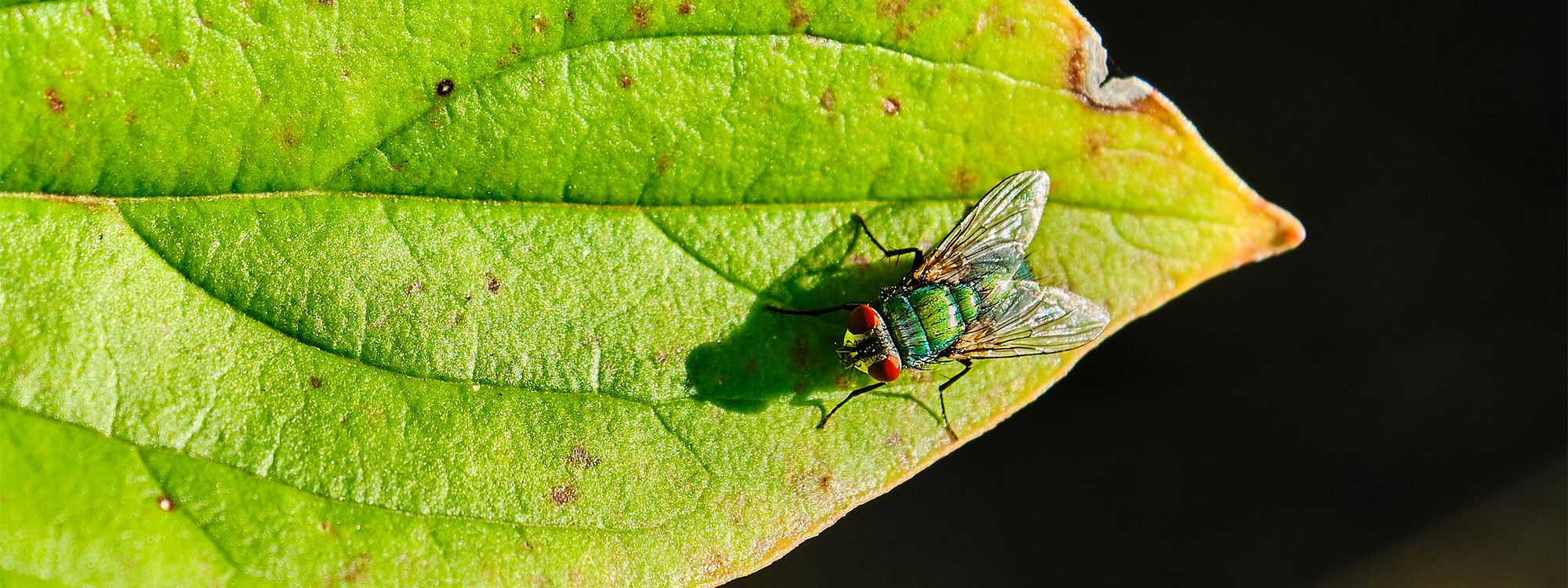
Blow flies are also known as “carrion flies” because that’s where some of the species in the family Calliphoridae like to lay their eggs. Their young are connoisseurs of various kinds of decomposing animals. But they are also known as “bluebottle” and “greenbottle” flies, because they are mirror-bright and jewel-toned. If you’ve ever exclaimed over a metallic green sweat bee or a copper butterfly, blow fly exoskeletons are equally bling-tastic. It’s just the fact that blow flies hang out with dead stuff that tarnishes their fabulousness in our eyes.
The adults tend to be robust, slightly larger than house flies, with shiny exoskeletons and small bristles across their backs. They have large, reddish-brown eyes and the ability to see very well. They also have an exceptional sense of smell — blowflies can smell rotting meat from up to a mile away! And that’s important, because female blow flies are looking for nutrition for their babies – they have about 2000 eggs to lay and a short time to do it. Blow flies are often the first scavengers to arrive on the scene when an animal dies. When adult blow flies find carrion, they are so excited to be providing for their young that they may buzz “loudly and continuously”, according to one source. As larvae, blow flies are smooth, conical, pale maggots — looking like every other maggot unless you are a maggot expert.

The rate at which the larvae develop depends on the temperature and species, usually a matter of days. When the maggot is ready to pupate, it burrows into the ground and emerges as an adult 1–2 weeks later.
These flies are tremendously adaptable and found (abundantly) in almost every terrestrial ecosystem: deserts, forests, grasslands, cities, and farms. They prefer areas that have some loose, damp soil and leaf litter, but can also often be seen “basking” on exterior walls of buildings on sunny days. Many animals eat this plentiful fly, including spiders, beetles, frogs, and birds.
Adult blow flies are pollinators, often common in disturbed or urbanized areas, where other species may be less common. They drink nectar from flowers to fuel their movement and mating. They are economically important for crop pollination around the world, ensuring our supply of avocados, mangos, onions, leeks, carrots, and cauliflower. Thanks to their bristly bodies they carry lots of pollen and can be active under a wider range of temperature conditions than bees. But we still don’t have that much information about their pollination abilities; blow flies, though ubiquitous, are woefully understudied. We think of all flies as preferring dull, stinky flowers, but when blow flies look for nectar at Baseline, they visit many of the same garden favorites as bees do: catmint, yarrow, wild roses, asters, rabbitbrush, and sedum.

Unfortunately, blow flies are also implicated as vectors of diseases such as bacterial infections. Safe and sanitary food storage and timely waste disposal, as well as placement of trash bins away from doors and windows are two very easy ways to keep blow flies outdoors pollinating where they belong. Window and door screens help, too. Fly baits use attractants specific to house flies, so they won’t work for blow flies. And if you are really intent on getting that fly out of your house, fly swatters never go out of style.
Learn more
Want to learn more about pollinators and how to help them? Contact Butterfly Pavilion’s horticulture department at ayarger@butterflies.org!
If you see this pollinator or others around Baseline, take a picture and upload it to Baseline’s iNaturalist page. By doing so, you can be a citizen scientist and help track the diversity and volume of pollinators at Baseline.