
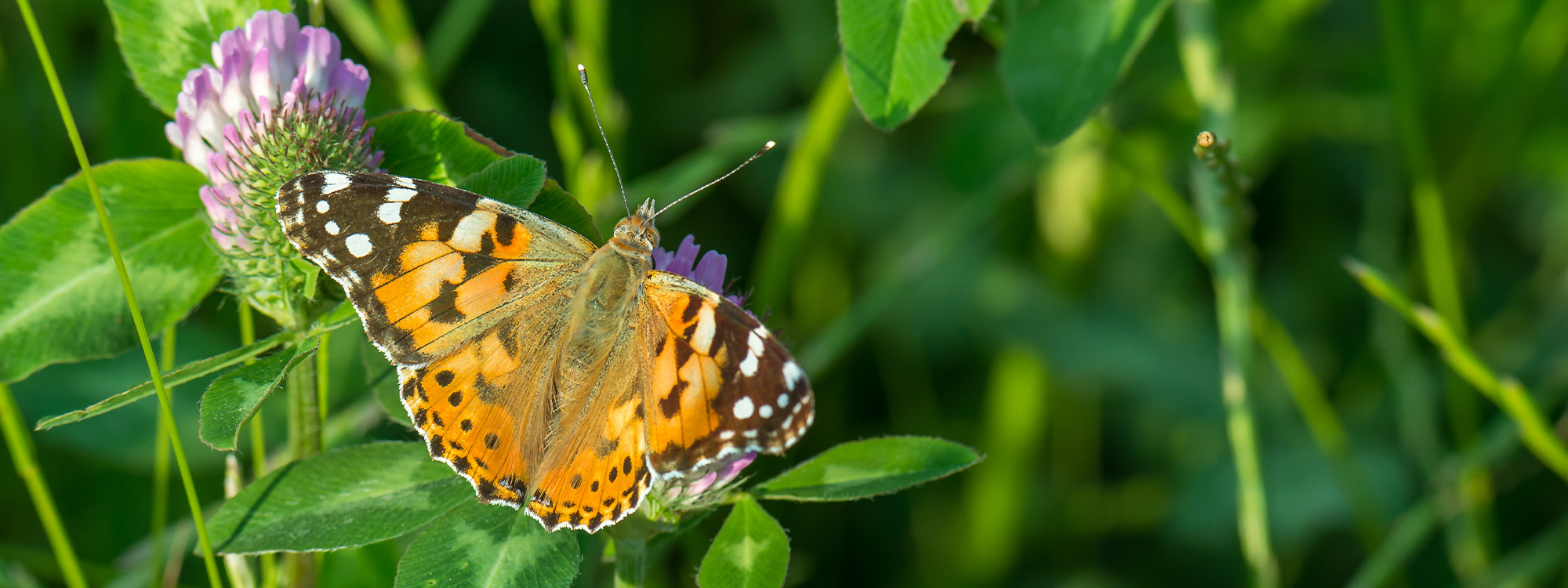
Painted Lady Butterfly
By Amy Yarger, Butterfly Pavilion Horticulture Director
Is it possible to get tired of butterflies? Back in September 2017, weather radar recorded a 70-mile-wide blob over the Denver metro area; meteorologists realized that the blob was thousands of painted lady butterflies. People on the ground noticed, too – every flower was covered with orange and black butterflies. Those few weeks were magical. I didn’t get tired of painted lady butterflies in 2017, and I’m happy to see them in Baseline now.
Another name for these butterflies is the “cosmopolitan” because painted lady butterflies occur on multiple continents, the most widespread butterfly species in the world. However, painted lady butterflies often get confused with another well-known black and orange butterfly, the monarch (Danaus plexippus). With a closer look, you can easily tell them apart; painted lady butterflies are significantly smaller than monarchs, only about two inches across instead of three or four inches across. Where monarchs have bold black veins on a deep Halloween-orange background, the painted lady markings look like a patchwork quilt of orange, apricot, tan, white, brown, and black. This complex wing pattern allows the butterfly to blend in with its surroundings. But the easiest way to tell them apart is the way they move: the monarch glides, the painted lady flitters.
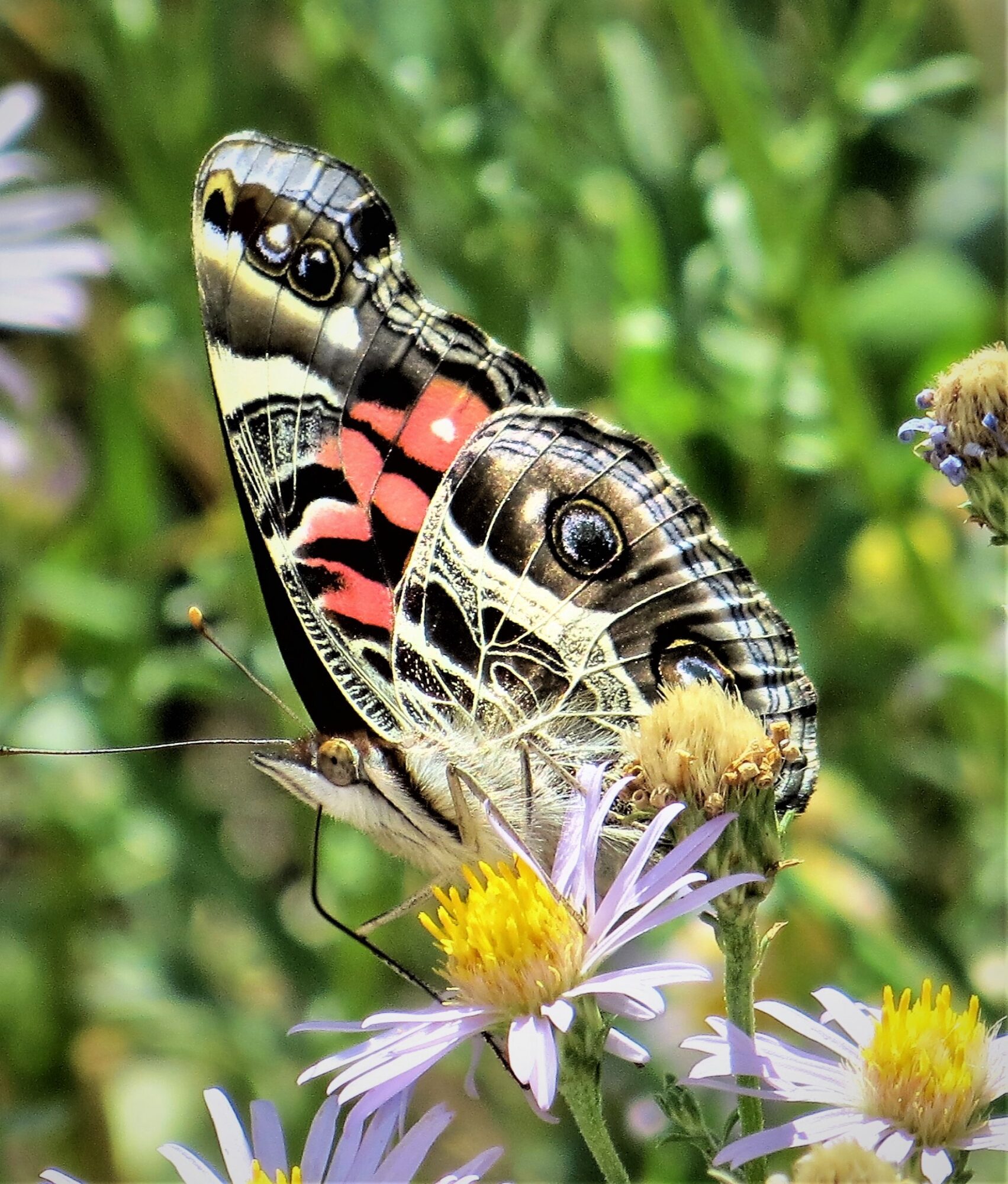
But don’t let all that agitated fluttering fool you; painted lady butterflies can travel long distances. Recently, researchers have found evidence of an autumn migration of painted lady butterflies between Europe and Africa, with some individuals making it from Iceland all the way to the Sahara Desert. Here in North America, there is evidence that painted lady butterflies escape autumn’s cold weather by traveling to the southwestern United States and Mexico. One of the reasons scientists hypothesize that the migration of painted lady butterflies is so mysterious is that they follow high altitude air currents sometimes hundreds of miles per day.
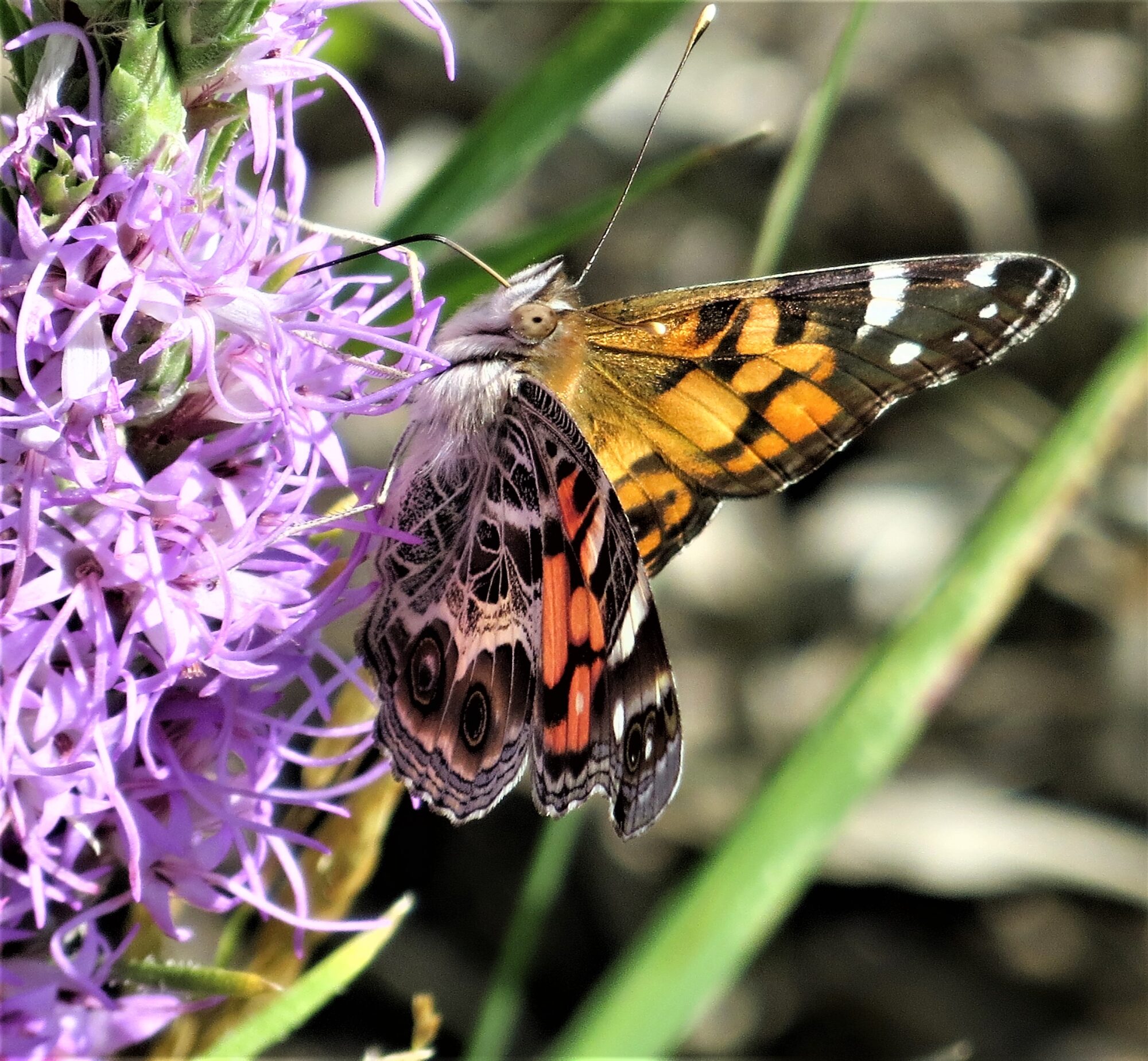
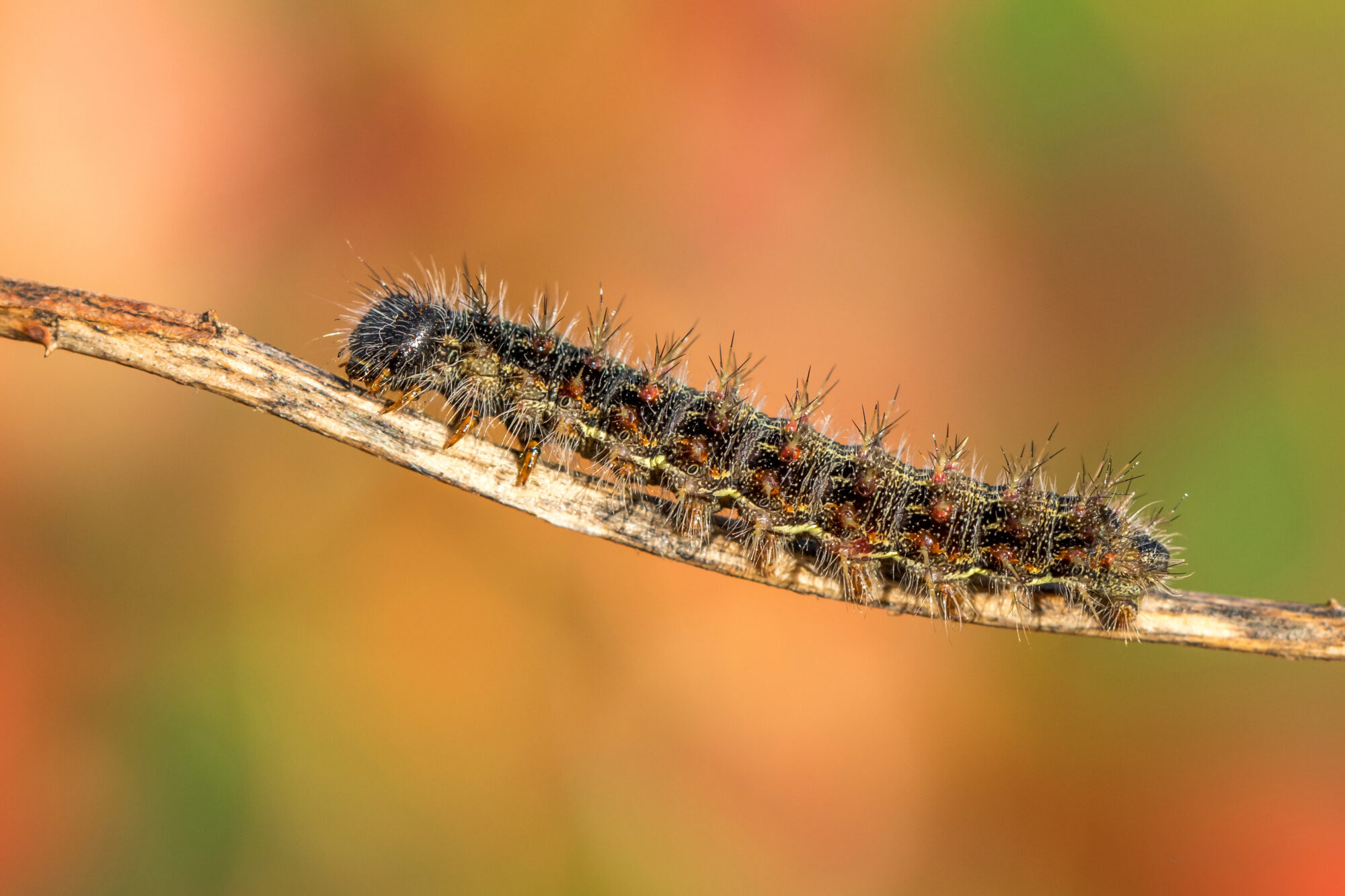
Adult painted lady butterflies spend their few weeks of life foraging for nectar and looking for mates. Males patrol hilltops and other open places on warm days, looking for receptive females. Mated female butterflies then lay eggs one at a time on the top of host plant leaves. Each female painted lady can produce around 500 eggs, which may be why we see so many adults later in the summer. The ugly duckling caterpillars, pale and spiky with dark gray markings, live in a slovenly silk nest, full of frass (aka insect poo), eating leaves until it is time to find a safe space to pupate. After seven to ten days in their silvery chrysalises, the cycle starts all over again. Painted lady butterflies have two or three generations from May to October in our region.
Painted lady butterflies grace many landscapes, such as gardens and parks, but also urban areas and fields, roadsides and deserts, foothills and prairies. One reason they can find a home anywhere is their wide range of larval host plants. Many butterflies are picky eaters in their larval stage, the legacy of chemical arms races between insect and plant, but not the painted lady! Scientists have documented over a hundred different food plants that painted lady caterpillars can thrive on. Some of the most common food plants for painted lady caterpillars are thistles, hollyhocks, mallows, borage, and legumes.
If you would like to see more painted lady butterflies, you can help to improve their habitat. Adult painted ladies especially like to drink nectar from asters and other late-blooming plants, so include a few of these in your landscape. Make sure that your garden has both open, sunny areas and a few shrubs for shelter. Painted lady butterflies, like many flying insects, have a multitude of hungry predators, and shrubs and grasses give them a place to escape to. Finally, these butterflies travel long distances, we can help them by encouraging others to add habitat to their own landscapes.
Not every year will be like the butterflies-seen-from-space phenomenon of 2017, but the changes we make to help painted lady butterflies will help them and other pollinators, too. Here’s to a beautiful butterfly-filled summer!
Want to learn more about pollinators and how to help them? Contact Butterfly Pavilion’s horticulture department at habitat@butterflies.org!
If you see this pollinator or others around Baseline, take a picture and upload it to Baseline’s iNaturalist page. By doing so, you can be a citizen scientist and help track the diversity and volume of pollinators at Baseline.