At first glance (and sound), it’s easy to mistake a bullsnake for a rattlesnake. Their coloring can be similar, and in the spring, bull snakes will puff and hiss like a rattlesnake because it’s breeding season and hormone levels are high.
However, they are very different snakes. The most important differences are: bullsnakes are non-venomous, rattlesnakes are venomous. While bull snakes have been spotted at Baseline, we have not received any reports of rattlesnakes to date. Fortunately, rattlesnakes do not typically live in a bull snake’s territory.
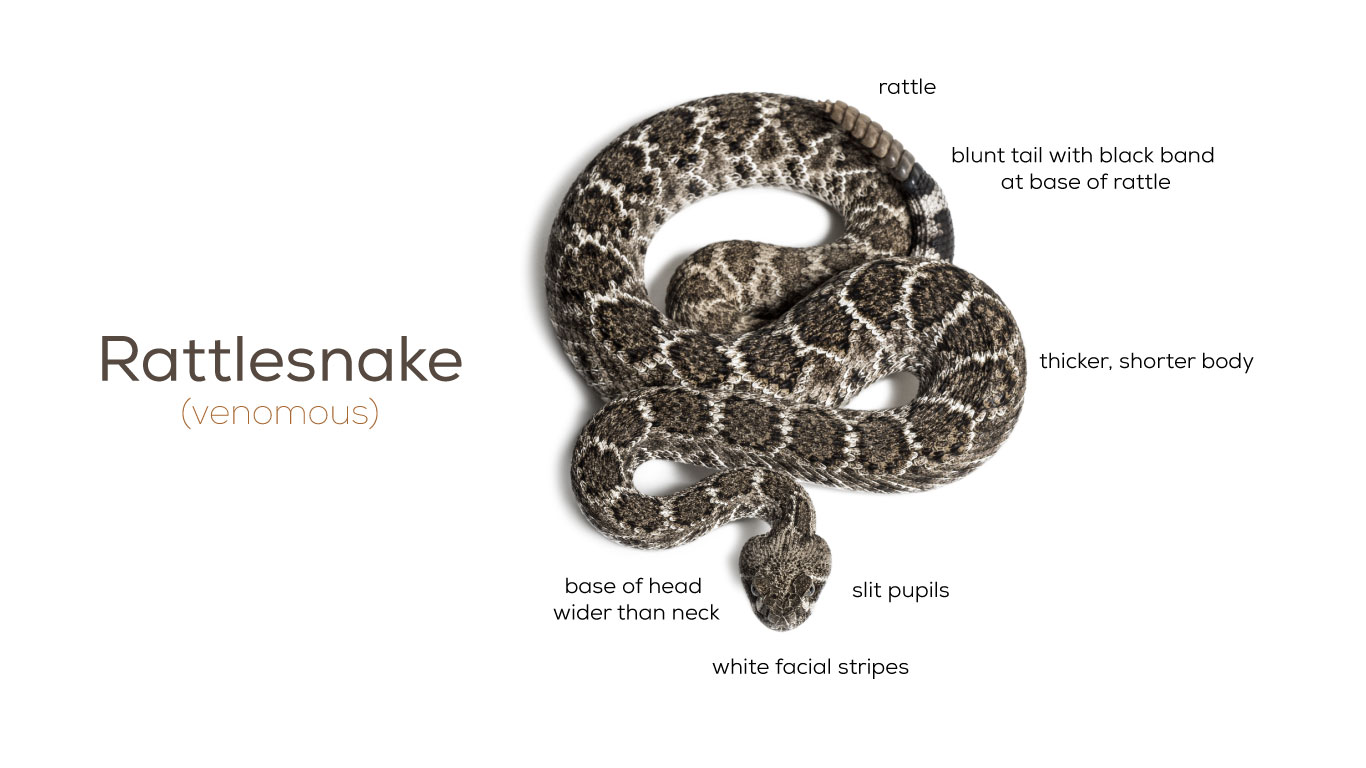
The images on this page show other ways to distinguish a bull snake from a rattlesnake. The tail and head shape are very different, but if you can’t see either, you can tell by the coloration. Rattlesnakes’ spots are the same color all the way down, while bullsnakes’ spot color transitions from black at the head to brown in the middle to black at the tail.
With knowledge and snake-to-human social distancing, there is little to fear if you come across a bull snake. Yes, they are a wild animal and they will bite, but they are more inclined to flee than attack. So give them their space. In some cases, bullsnakes may make a rattle sound when threatened, but they are making the sounds with their mouth. Mimicking rattlesnakes (both in sound and appearance) is a neat trick they do to seem more intimidating to potential predators.
Remember that bullsnakes are an integral part of our ecosystem and help control rodents and rabbits. So if you spot one, make a wide berth and keep kids and pets away. In Colorado, rattlesnakes may be legally killed if they pose a threat. All other snakes are classified as nongame wildlife and are protected by law. If you find a snake in your garage, you can call a pest control company to have it removed.